Call for Civil Affairs Issue Papers: “Civil Affairs: Securing the Victory in New Environments”


Last year’s Symposium examined how to redefine the role of civil affairs (CA) in large-scale combat operations (LSCO) as a critical economy-of-force capability that preserves combat power and lethality, consolidates gains, and shapes conditions in the human dimension to “secure the victory” – before, during, and after LSCO. CA does this through its core competencies of Military Government Operations (MGO), Civil Network Development and Engagement (CDNE), Civil Knowledge Integration (CKI), and Civil-Military Integration (CMI), as well as through CA mission tasks outlined in Army Field Manual 3-57, Civil Affairs Operations (CAO).
The Symposium also revealed shifting strategic assumptions guiding these competencies and tasks. These include changes in civilian partnering at interagency and international levels, e.g., the loss of its main interagency partner in the U.S. Agency for International Development; resulting shifts in humanitarian and stabilization leadership to the military – and thus CA; evolving alliance and regional power dynamics; a growing need for CA to expand its global civil-military network and funding and authorities to fill gaps and meet a more robust mission set, to include possible homeland security roles – as noted in the last Symposium Report and Civil Affairs Issue Papers.
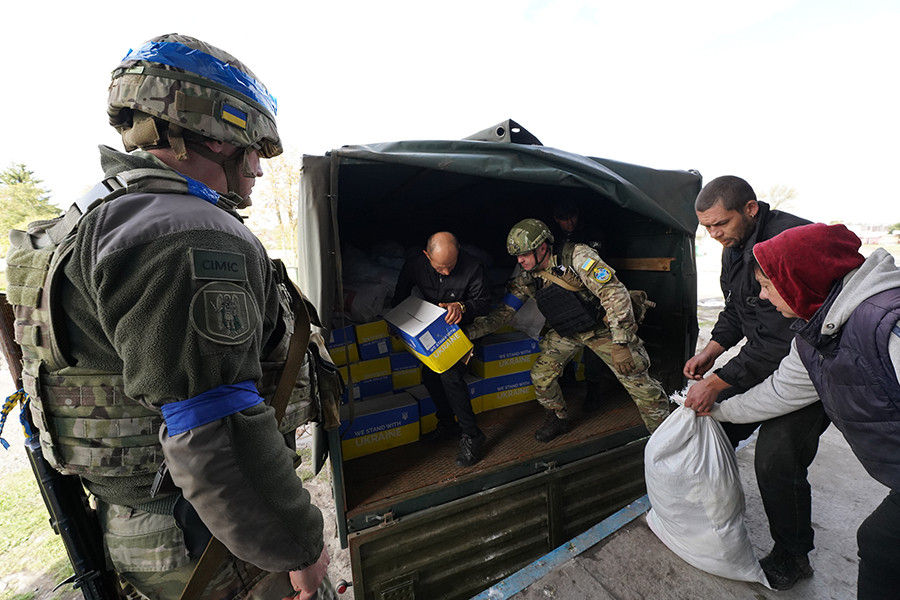
As policy and doctrine at national security, joint, service, and proponent levels continue to redefine CA, the community must consider how CA can continue to “secure the victory” in new strategic and operational environments. Key questions include: How can institutions and commands develop CA capability and capacity for both irregular and conventional warfare in light of changing related strategic assumptions? What lessons emerge from the wars in Ukraine, Gaza, and with Iran? What insights can be drawn from our NATO CIMIC partners? What DOTMLPF-P[1] changes are required – and how should they be prioritized and implemented?
To address these questions, the Civil Affairs Association and partners invite the CA and civil-military communities of practice to submit original issue papers prepared according to the Civil Affairs Issue Paper Guidelines. Key CA and IW stakeholders – including the U.S. Army John F. Kennedy Special Warfare Center and School, U.S. Army Security Force Assistance and Stability Integration Directorate, the U.S. Marine Corps Civil-Military Operations School, U.S. Army Civil Affairs and Psychological Operations Command (Airborne), and 95th Civil Affairs Brigade (Special Operations) (Airborne) – may provide additional guidance on priorities.
Research should consider current policy and doctrine, previous Issue Papers, and OneCA podcasts. Authors should also draw from leading civil‑military and contemporary warfare sources, including the Irregular Warfare Center’s Prism, Association of the United States Army, NATO CIMIC Center of Excellence, Modern War Institute, Irregular Warfare Initiative, Security Force Assistance and Stability Integration Directorate, Joint Special Operations University, Joint Civil-Military Interaction Network, and Small Wars Journal.
The top five papers will be published in the 2026-27 Civil Affairs Issue Papers. Selection criteria include: quality of response to the call and guidelines (i.e., “answering the mail”); relevance and originality; clarity of argument; research sourcing; and feasibility and systemic impact of DOTMLPF-P recommendations. Papers addressing CA proponent or command guidance and among civil-military and interagency partners are encouraged. Selected paper authors will present at the 13-15 November 2026 CA Symposium at the Ronald Reagan Presidential Library in Simi Valley, CA. Cash awards for the top three presentations are: 1st – $2,500; 2nd – $1,000; and 3rd – $500.
Send inquiries to papers@civilaffairsassoc.org. Submit papers there no later than Friday, 11 September 2026.
[1] Doctrine, organization, training, materiel, leadership and education, personnel, facilities, and policy.